When choosing between AlN and Al2O3 ceramic PCBs, the decision hinges on the balance between thermal performance and cost. Al2O3 (Alumina) is the industry standard for cost-effective, general-purpose applications due to its excellent electrical insulation and mechanical strength. Conversely, AlN (Aluminum Nitride) is the superior choice for high-power, high-frequency applications where extreme thermal management is critical, as its thermal conductivity is roughly 7-8 times higher than that of Alumina.
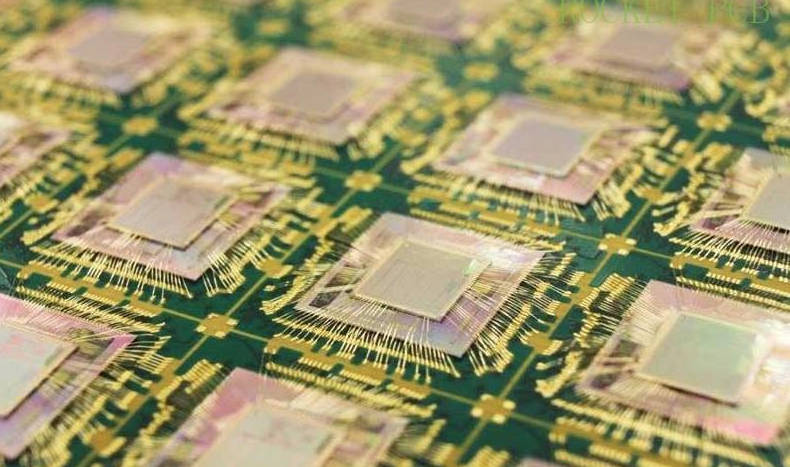
Introduction to Ceramic PCB Materials
In the evolving landscape of power electronics, light-emitting diodes (LEDs), and automotive control systems, the Printed Circuit Board (PCB) substrate plays a pivotal role in overall device reliability. As electronics become more compact and power-dense, traditional FR4 boards often fail to manage the heat generated by components. This is where ceramic PCBs enter the frame. Among the available materials, Al2O3 (Alumina) and AlN (Aluminum Nitride) are the two most prominent contenders. Understanding the physical and thermal properties of these materials is essential for engineers and procurement professionals to optimize design performance and manufacturing costs.
What is Al2O3 (Alumina) Ceramic PCB?
Alumina (Al2O3) is the most widely utilized ceramic substrate in the electronics industry. It is prized for its balance of properties, offering high mechanical strength, excellent electrical resistivity, and moderate thermal conductivity (typically around 20-30 W/mK). Because it has been in production for decades, its manufacturing processes—such as Direct Bonded Copper (DBC) and Thick Film processing—are mature and highly cost-effective.
Al2O3 is essentially the “workhorse” of the ceramic PCB world. It provides sufficient cooling for standard power modules and reliable insulation for high-voltage circuits. However, as power densities rise, the thermal bottleneck of Al2O3 becomes apparent, necessitating the consideration of higher-performance alternatives.
What is AlN (Aluminum Nitride) Ceramic PCB?
Aluminum Nitride (AlN) represents the high-end tier of ceramic substrates. It is a synthetic ceramic material engineered specifically to bridge the gap between high electrical insulation and high thermal conductivity. AlN offers thermal conductivity levels ranging from 170 W/mK to over 230 W/mK, significantly outperforming Al2O3.
Beyond its heat-dissipation capabilities, AlN is favored for its Coefficient of Thermal Expansion (CTE), which closely matches that of Silicon (Si). This makes it an ideal substrate for power devices like IGBTs (Insulated Gate Bipolar Transistors) and high-frequency RF modules, as it reduces thermal stress and potential cracking during the rapid thermal cycling often encountered in power electronics.
Comparative Analysis: AlN vs. Al2O3
To determine which material performs better for your specific application, we must look at the technical metrics. The following table summarizes the key differences:
| Property | Al2O3 (Alumina) | AlN (Aluminum Nitride) |
|---|---|---|
| Thermal Conductivity | 20–30 W/mK | 170–230 W/mK |
| CTE (x10^-6/K) | ~7.0 | ~4.5 |
| Mechanical Strength | Excellent | Very Good |
| Cost | Low/Economical | High/Premium |
| Best Application | Standard Power/LED | High-Power/High-Frequency |
1. Thermal Conductivity: The Deciding Factor
The most dramatic difference between the two materials is their thermal conductivity. Heat management is arguably the most critical aspect of modern PCB design. If your components generate substantial heat, Al2O3 may act as a thermal barrier, leading to hot spots and decreased component lifespan. AlN acts as an efficient heat sink, pulling heat away from the die significantly faster than Al2O3, allowing for smaller form factors and higher current density.
2. CTE Matching and Reliability
In power electronics, components are subjected to wide temperature swings. If the substrate expands at a drastically different rate than the semiconductor die (like Silicon or SiC), the solder joints will experience mechanical fatigue. Since AlN has a CTE closer to Silicon than Al2O3, it reduces the mismatch stress, leading to more robust, long-lasting assemblies in harsh environments, such as automotive under-the-hood applications or aerospace systems.
3. Cost and Availability
While AlN offers superior technical performance, it comes at a higher price point—often 3 to 5 times the cost of Al2O3. Furthermore, Al2O3 is available in more sizes and thicknesses due to its ubiquity. For consumer electronics or general industrial applications where moderate heat dissipation is acceptable, paying the premium for AlN is rarely justifiable. Al2O3 provides the best ROI for 80% of PCB applications.
How to Choose the Right Material for Your Application
To finalize your decision, consider the following decision-making framework:
- Choose Al2O3 if: Your project is cost-sensitive, the power density is low to moderate, or you require standard, readily available manufacturing processes. It is perfect for standard LED lighting and common power supply designs.
- Choose AlN if: You are designing for high-power density, high-frequency signal integrity, or environments with extreme thermal cycling. It is the go-to material for electric vehicle (EV) power trains, 5G RF amplifiers, and high-end laser diodes.
Conclusion
There is no universal “better” material when comparing AlN and Al2O3; there is only the right material for the specific application. Al2O3 remains the backbone of the ceramic PCB industry, offering exceptional reliability and cost efficiency. However, as the industry pushes toward higher performance and higher heat tolerance, AlN is becoming indispensable. By carefully evaluating your thermal requirements, cost constraints, and mechanical stress profiles, you can make an informed choice that ensures both the performance and longevity of your electronic systems.