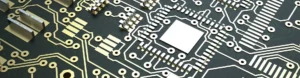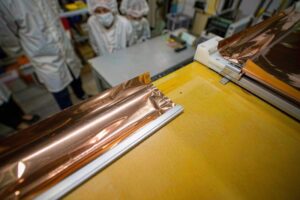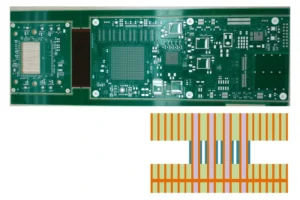
Low-loss PCB manufacturing is the process of fabricating printed circuit boards with materials, stackups, copper profiles, and process controls designed to reduce signal attenuation in RF and microwave circuits. For high-frequency applications, loss is not only a design issue. It is also strongly affected by substrate selection, dielectric loss, conductor loss, copper roughness, impedance control, lamination stability, and fabrication tolerances.
In RF and microwave circuits, even small material or manufacturing variations can influence insertion loss, phase stability, impedance matching, and overall signal integrity. This is why low-loss PCB manufacturing requires more than standard PCB fabrication. It needs an engineering-focused manufacturing approach that considers the electrical behavior of the board at the target operating frequency.
For companies developing antennas, radar modules, wireless communication systems, RF amplifiers, satellite communication devices, or high-frequency test equipment, working with a PCB manufacturer experienced in high-frequency RF PCB manufacturing can help reduce risk before production.
What Is a Low-Loss PCB?
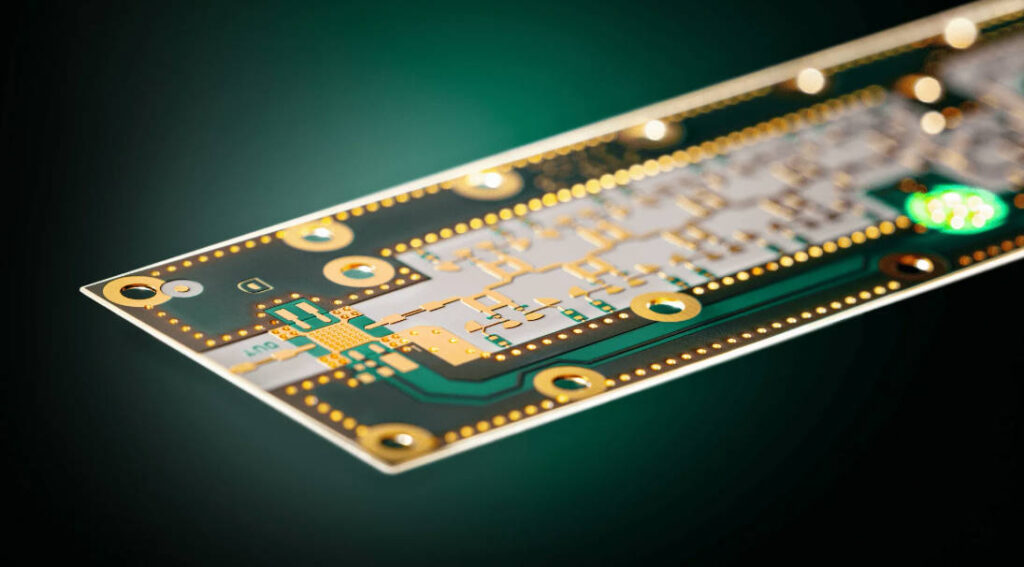
A low-loss PCB is a circuit board designed and manufactured to minimize signal attenuation as signals travel through transmission lines, vias, connectors, and copper traces. In many RF and microwave applications, the PCB is not just a mechanical carrier for components. It becomes part of the transmission structure.
The term “low-loss” usually refers to a combination of factors:
| Factor | Why It Matters |
| Low dielectric loss | Reduces energy loss inside the PCB substrate |
| Stable dielectric constant | Helps maintain predictable impedance and phase behavior |
| Smooth copper surface | Reduces conductor loss at high frequencies |
| Controlled impedance | Reduces reflection and signal mismatch |
| Optimized stackup | Supports microstrip, stripline, coplanar waveguide, and other RF structures |
| Tight fabrication tolerances | Keeps real board performance closer to simulation |
A low-loss PCB is not defined by one material property alone. It is the result of matching the right material, stackup, copper type, design rules, and manufacturing process to the target RF or microwave application.
Why Low-Loss PCB Manufacturing Matters in RF and Microwave Circuits
At low frequencies, a standard PCB material may perform well enough for many digital or analog circuits. However, as frequency increases, the PCB material and conductor structure become more critical.
In RF and microwave circuits, signal loss can lead to:
- Lower transmission efficiency
- Higher noise figure
- Reduced antenna performance
- Poor impedance matching
- Increased heat generation
- Shorter communication range
- Lower measurement accuracy
- Greater variation between prototype and production boards
For example, a wireless communication module may pass basic electrical testing but still show poor RF performance if the board material has excessive dielectric loss or unstable Dk. A radar module may also experience degraded sensitivity if the transmission path introduces excessive insertion loss.
For this reason, low-loss PCB fabrication is especially important in applications such as:
- 5G communication modules
- RF front-end circuits
- Microwave filters
- Radar systems
- Antenna feed networks
- Satellite communication equipment
- RF power amplifiers
- High-frequency test instruments
- Aerospace and industrial wireless systems
If your project requires stable signal transmission at RF or microwave frequencies, the PCB should be reviewed as an electrical component, not only as a physical board.
Key Electrical Concepts in Low-Loss PCB Manufacturing
Dielectric Constant, or Dk
Dielectric constant, often called Dk, describes how much a PCB material slows down electromagnetic signal propagation compared with air. In high-frequency PCB design, Dk affects impedance, wavelength, trace width, and phase behavior.
A stable Dk is important because RF designs often rely on predictable transmission-line geometry. If the actual Dk varies from the design assumption, the impedance and electrical length may shift.
Common design concerns related to Dk include:
- Whether the material Dk is suitable for the target frequency
- Whether the Dk is stable over temperature
- Whether the Dk is consistent across the panel
- Whether the manufacturer can control dielectric thickness during lamination
Lower Dk materials are often used when designers need wider traces, lower parasitic capacitance, or better high-frequency performance. Higher Dk materials may be used when circuit miniaturization is more important, but they may require more careful loss and tolerance analysis.
Dissipation Factor, or Df
Dissipation factor, also known as loss tangent or Df, indicates how much energy is lost in the dielectric material when an electromagnetic field passes through it.
For RF and microwave PCB applications, low Df is often one of the most important material properties because dielectric loss increases with frequency.
A material with a lower Df usually provides lower dielectric loss, which helps reduce insertion loss in transmission lines. This is why many RF and microwave boards use specialized low-loss materials instead of standard FR4.
However, Df should not be evaluated alone. Engineers should also consider Dk stability, copper roughness, thermal properties, moisture absorption, availability, manufacturability, and cost.
Insertion Loss
Insertion loss measures how much signal power is lost when a signal passes through a transmission path. In PCB design, insertion loss can come from several sources:
| Loss Source | Description |
| Dielectric loss | Energy absorbed by the PCB substrate |
| Conductor loss | Resistance-related loss in copper traces |
| Copper roughness loss | Additional loss caused by rough copper surfaces at high frequency |
| Radiation loss | Energy radiated from poorly controlled transmission structures |
| Reflection loss | Loss caused by impedance mismatch |
| Via and transition loss | Loss from discontinuities, via stubs, pads, and layer transitions |
Insertion loss is especially important for long RF paths, high-frequency signals, broadband circuits, and systems with tight power budgets.
Copper Roughness
At high frequencies, current tends to flow near the surface of the conductor. This is known as the skin effect. As frequency increases, copper surface roughness can become more influential.
Rougher copper may improve mechanical adhesion, but it can also increase conductor loss. Smoother copper can reduce high-frequency conductor loss, but it must still be compatible with reliable lamination and fabrication.
In low-loss PCB manufacturing, copper foil selection should balance signal performance, peel strength, manufacturability, and cost.
Common Low-Loss PCB Materials for RF and Microwave Circuits
Low-loss PCB materials are selected based on electrical performance, frequency, thermal requirements, mechanical needs, cost, and fabrication compatibility. Common material categories include PTFE-based laminates, ceramic-filled PTFE, hydrocarbon ceramic laminates, and other RF-grade substrates.
| Material Type | Typical Strengths | Common Considerations |
| Standard FR4 | Cost-effective, widely available, easy to process | Higher loss and less stable Dk at high frequencies |
| Low-loss FR4 | Better loss performance than standard FR4 | May still be limited for demanding RF/microwave designs |
| PTFE-based laminates | Very low dielectric loss, suitable for microwave applications | More complex processing and higher cost |
| Ceramic-filled PTFE | Low loss, improved stability, useful for RF power and microwave circuits | Requires experienced fabrication control |
| Hydrocarbon ceramic laminates | Good RF performance and process compatibility in many applications | Material selection depends on frequency and stackup |
| Hybrid stackups | Combine RF materials with FR4 or other cores | Requires careful lamination and CTE compatibility review |
For many RF and microwave circuits, the material decision should be made together with the stackup and impedance model. A low-loss material can still perform poorly if the stackup is not controlled or if manufacturing tolerances are too loose.
Mars-PCB supports customers working with high-frequency circuit requirements through its high-frequency PCB fabrication service, including RF and microwave applications where material selection and process control are important.
Low-Loss PCB Manufacturing Process: What Needs to Be Controlled?
Low-loss PCB fabrication is not only about buying a special laminate. The manufacturing process must preserve the intended electrical performance of the design.
1. Material Selection and Verification
The first step is to confirm the substrate type, copper weight, dielectric thickness, copper profile, and material availability. Engineers should avoid vague material specifications such as “Rogers or equivalent” without defining acceptable alternatives.
A better material specification may include:
- Material brand and grade
- Dk and Df requirements
- Dielectric thickness
- Copper weight
- Copper type or roughness requirement
- Glass style, if relevant
- Thermal or reliability requirements
- Approved substitute materials, if allowed
2. Stackup Engineering
The PCB stackup determines trace impedance, coupling, loss, and manufacturability. For RF and microwave boards, common structures include microstrip, stripline, grounded coplanar waveguide, and hybrid stackups.
Stackup review should consider:
- Dielectric thickness
- Copper thickness after plating
- Reference plane location
- RF layer position
- Ground plane continuity
- Controlled impedance requirements
- Isolation between RF and digital sections
- Lamination symmetry and warpage risk
3. Controlled Impedance Fabrication
Controlled impedance requires coordination between design geometry and manufacturing capability. Trace width, trace spacing, copper thickness, etching tolerance, dielectric thickness, and Dk all affect final impedance.
A qualified manufacturer should be able to review impedance requirements before production and identify any design features that may be difficult to fabricate consistently.
4. Etching and Line Width Control
At RF and microwave frequencies, small trace geometry changes can affect impedance and signal loss. Etching compensation becomes important, especially for fine RF lines, tight coupling structures, and controlled impedance traces.
Key fabrication considerations include:
- Line width tolerance
- Copper thickness tolerance
- Etching uniformity
- Panel-level variation
- Differential pair spacing
- RF trace edge quality
5. Lamination Control
RF materials can behave differently from standard FR4 during lamination. Some materials require more careful pressure, temperature, bonding material, and thermal expansion management.
Lamination control affects:
- Dielectric thickness stability
- Layer registration
- Void control
- Bonding reliability
- Warpage
- Final impedance consistency
6. Drilling, Plating, and Via Design
Vias can introduce impedance discontinuities, parasitic inductance, and unwanted stubs. In RF PCB manufacturing, via structure and plating quality should be reviewed carefully.
Typical concerns include:
- Via stub length
- Ground via spacing
- Signal via transitions
- Back drilling, if required
- Plated through-hole quality
- Pad size and anti-pad design
- Via-to-plane connection quality
7. Surface Finish Selection
Surface finish affects solderability, assembly reliability, and in some cases high-frequency performance. ENIG, immersion silver, OSP, and other finishes may be considered depending on application requirements.
The right surface finish depends on assembly method, shelf life, RF performance expectations, wire bonding needs, and reliability requirements.
Low-Loss PCB vs Standard PCB Manufacturing
| Comparison Item | Standard PCB Manufacturing | Low-Loss PCB Manufacturing |
| Main goal | General electrical connection | Minimized signal loss and controlled RF behavior |
| Common materials | FR4 and standard laminates | Low-loss RF and microwave materials |
| Key material properties | Tg, thickness, copper weight | Dk, Df, copper roughness, thermal stability |
| Stackup focus | Mechanical and routing needs | Transmission-line behavior and impedance |
| Tolerance sensitivity | Moderate in many applications | High, especially for RF traces and dielectric thickness |
| Copper profile | Often selected for cost and availability | Selected for loss, adhesion, and signal performance |
| DFM review | Useful | Critical before fabrication |
| Typical applications | Consumer electronics, industrial control, general PCBs | RF modules, antennas, radar, 5G, microwave circuits |
The main difference between standard PCB manufacturing and low-loss PCB manufacturing is that low-loss boards must be fabricated to preserve high-frequency electrical performance, not only physical connectivity.
How to Choose the Right Low-Loss PCB Material
Selecting the right material depends on the application, frequency, circuit length, signal power, thermal conditions, and cost target.
Key Selection Criteria
| Selection Factor | What to Check |
| Operating frequency | Higher frequencies usually require lower-loss materials |
| Df / loss tangent | Lower Df helps reduce dielectric loss |
| Dk stability | Stable Dk supports predictable impedance and phase |
| Copper roughness | Smoother copper can reduce conductor loss |
| Thermal performance | Important for power amplifiers and harsh environments |
| Moisture absorption | Lower absorption supports stable RF performance |
| Manufacturability | Some materials require specialized processing |
| Cost and lead time | Material availability can affect project schedule |
| Stackup compatibility | Important for multilayer or hybrid designs |
When Low-Loss FR4 May Be Enough
Low-loss FR4 may be suitable for some high-speed or moderate-frequency applications where cost matters and the RF path is not extremely demanding. However, it may not be enough for microwave circuits, precision RF filters, high-frequency antennas, radar modules, or long transmission paths where insertion loss must be tightly controlled.
When Specialized RF Materials Are Needed
Specialized RF materials are often preferred when the design requires:
- Lower insertion loss
- Stable impedance at high frequency
- Better phase consistency
- Microwave performance
- High-frequency antenna efficiency
- Lower dielectric loss
- Improved thermal stability
- Better repeatability between prototypes and production
For projects where material choice is uncertain, engineers can contact Mars-PCB to discuss PCB manufacturing requirements before finalizing the stackup.
Common Mistakes in Low-Loss PCB Projects
Mistake 1: Selecting Material Only by Dk
Dk is important, but it is not the only factor. A material with the desired Dk may still have higher loss, poor thermal stability, unsuitable copper roughness, or limited manufacturability.
Mistake 2: Ignoring Copper Roughness
Many engineers focus on dielectric loss but underestimate conductor loss. At high frequencies, copper roughness can significantly influence insertion loss and impedance behavior.
Mistake 3: Using Standard FR4 for Demanding RF Paths
FR4 may work in some lower-frequency or cost-sensitive designs, but it is not always suitable for demanding RF and microwave circuits. The decision should be based on frequency, loss budget, line length, and system performance.
Mistake 4: Sending Files Without Stackup or Impedance Requirements
Gerber files alone may not provide enough information for RF PCB fabrication. The manufacturer also needs the stackup, material requirements, impedance values, copper weight, surface finish, and special notes.
Mistake 5: Treating RF PCB Fabrication as Standard PCB Fabrication
RF and microwave boards require closer cooperation between design and manufacturing. A lack of DFM review can lead to impedance deviations, unexpected loss, assembly issues, and prototype delays.
What to Provide When Requesting a Low-Loss PCB Quote
To receive a more accurate quotation and manufacturing review, customers should prepare clear technical information.
| Required Information | Why It Matters |
| Gerber files | Defines the circuit pattern and board geometry |
| Drill files | Defines hole sizes and locations |
| Stackup drawing | Defines layer structure and dielectric thickness |
| Material requirement | Helps confirm Dk, Df, and manufacturability |
| Controlled impedance values | Needed for impedance modeling and process planning |
| Copper weight | Affects loss, impedance, current capacity, and etching |
| Board thickness | Affects mechanical fit and RF behavior |
| Surface finish | Affects assembly, reliability, and sometimes RF performance |
| Quantity | Affects pricing and production planning |
| Application notes | Helps the manufacturer understand performance priorities |
If you are developing RF or microwave circuits, you can use Mars-PCB’s high-frequency PCB manufacturing service to start a DFM discussion around materials, stackup, impedance control, and fabrication requirements.
How to Choose a Low-Loss PCB Manufacturer
A low-loss PCB manufacturer should understand both PCB fabrication and the electrical requirements of high-frequency circuits. The right supplier should not only produce boards, but also help identify manufacturability risks before production.
What to Evaluate
| Evaluation Point | Why It Matters |
| High-frequency material experience | RF materials may require different processing from standard FR4 |
| Controlled impedance capability | Essential for RF traces and transmission lines |
| Stackup review support | Helps align design intent with manufacturing reality |
| Lamination process control | Affects dielectric thickness, bonding, and impedance |
| Copper profile options | Important for reducing conductor loss |
| DFM review process | Reduces fabrication and assembly risk |
| Communication quality | Helps resolve material and tolerance issues early |
| Prototype and production support | Supports development from sample to volume manufacturing |
When evaluating a supplier, ask whether they can review material choice, stackup, impedance, via transitions, and surface finish before fabrication. This is often more valuable than simply comparing unit price.
Engineering Recommendations for Lower-Loss RF and Microwave PCBs
Here are practical engineering guidelines for low-loss PCB projects:
- Choose materials based on Dk, Df, thermal stability, copper profile, and manufacturability.
- Define the stackup early instead of leaving it to the fabrication stage.
- Specify controlled impedance values clearly.
- Keep RF transmission paths as short and direct as possible where practical.
- Maintain continuous reference planes under RF traces.
- Avoid unnecessary via transitions in critical RF paths.
- Use ground vias strategically around RF structures.
- Review via stubs for microwave designs.
- Choose copper foil with appropriate roughness for the loss budget.
- Ask for DFM review before final production.
For complex RF and microwave projects, early communication with a PCB manufacturer can prevent expensive redesigns. Mars-PCB provides RF and microwave PCB fabrication support for customers developing high-frequency circuit boards.
FAQ: Low-Loss PCB Manufacturing for RF and Microwave Circuits
1. What is low-loss PCB manufacturing?
Low-loss PCB manufacturing is the fabrication of circuit boards using low-loss materials, controlled stackups, smooth copper options, impedance control, and process controls to reduce signal attenuation in RF and microwave circuits.
2. What is the best low-loss PCB material for RF circuits?
There is no single material that fits every RF circuit. The right low-loss PCB material depends on operating frequency, insertion loss budget, Dk stability, Df, copper roughness, thermal requirements, stackup, cost, and availability.
3. Why is FR4 not always suitable for microwave PCB fabrication?
Standard FR4 can have higher dielectric loss and less stable high-frequency performance than specialized RF materials. For microwave PCB fabrication, designers often use low-loss laminates when insertion loss, phase stability, or impedance control is critical.
4. How does copper roughness affect RF PCB loss?
At high frequencies, current flows near the copper surface. Rougher copper can increase conductor loss and affect impedance behavior. For low-loss RF PCB designs, copper profile should be reviewed together with material and stackup requirements.
5. What causes insertion loss in high-frequency PCBs?
Insertion loss in high-frequency PCBs can be caused by dielectric loss, conductor loss, copper roughness, impedance mismatch, radiation loss, via transitions, connector launches, and poor stackup control.
6. What files are needed for low-loss PCB fabrication?
For low-loss PCB fabrication, manufacturers typically need Gerber files, drill files, stackup information, material requirements, controlled impedance values, copper weight, board thickness, surface finish, quantity, and any special RF notes.
7. How do I choose a low-loss PCB manufacturer?
Choose a low-loss PCB manufacturer with experience in high-frequency materials, controlled impedance, RF stackup review, lamination control, copper profile selection, and DFM support for RF and microwave applications.
Conclusion
Low-loss PCB manufacturing is essential for RF and microwave circuits where signal attenuation, impedance stability, and material performance directly affect system results. A successful low-loss PCB project requires the right substrate, stable Dk and Df, suitable copper profile, controlled impedance, reliable lamination, and careful DFM review.
For engineers and purchasing teams, the most important step is to treat the PCB as part of the RF system. Material selection, stackup, copper roughness, vias, surface finish, and fabrication tolerances should be reviewed before production begins.
If you are developing RF modules, microwave circuits, radar boards, antenna PCBs, or high-frequency communication devices, Mars-PCB can support your project with custom high-frequency PCB manufacturing and engineering-focused fabrication review.